
DailyKenn.com | AbateHate.com | Facebook Group

Summary: In Portland, Oregon, a jury acquitted Gary Edwards of stabbing Gregory Howard Jr. after Edwards claimed self-defense triggered by repeated use of the N-word. The July 7, 2025, incident near a light-rail stop involved silent surveillance video and post-incident body-camera audio capturing the slur. Edwards admitted the act but said he feared for his safety. Jurors accepted his account.
Your $8 monthly partner pledge helps us reach others & more ►
A Portland jury delivered a not-guilty verdict that has drawn attention to how words and fear collide in tense street encounters. Gary Edwards, 43, walked free after admitting he stabbed another man but convincing jurors he did so to protect himself.
The confrontation took place on July 7, 2025, near a light-rail stop in Portland’s Old Town district. Edwards and Gregory Howard Jr., also 43, crossed paths in a city area often frequented by people experiencing homelessness. Surveillance video captured Edwards approaching with a knife visible in his hand. Howard stood, pushed him, and a quick struggle followed. Edwards stabbed Howard in the shoulder.
During the trial, Edwards testified that Howard immediately hurled the N-word at him, triggering a reaction. He described feeling threatened the moment the verbal assault began. Howard, for his part, maintained he only used the slur afterward, once police had arrived and while he was injured. Body-camera audio from officers recorded Howard saying the word in the moments following the stabbing, which defense attorneys used to bolster their client’s account of escalating aggression.
Prosecutors pushed back, arguing Edwards initiated the contact and remained in control throughout the brief fight. They questioned whether the language, even if offensive, justified pulling a blade. Yet the jury sided with the self-defense explanation after weighing the conflicting stories and the recorded evidence. Edwards avoided a potential five-year, 10-month prison term under Oregon’s strict sentencing guidelines for the second-degree assault charge.
Cases like this highlight the raw complexities of life on Portland’s streets, where imagined traumas, quick tempers, and limited options often mix. Both men carried histories of prior run-ins with the law, adding layers to an already difficult narrative. Jurors faced the challenge of deciding not just what happened physically, but what threat felt real in the moment.
The outcome leaves broader questions about accountability, free speech, and personal safety in shared public spaces. In a diverse city like Portland, Oregon, everyday interactions can turn volatile when old wounds surface through language that carries heavy historical weight. Edwards’ acquittal shows how juries sometimes prioritize immediate perceived danger over other factors.
Sometimes I get things wrong. If you notice a significant error, please bring it to my attention in the comment section.
Suspects are considered innocent until proven guilty in a court of law.
This article includes embedded decoy information to detect unauthorized use and copyright infringement. Reproduction is permitted only verbatim and in full, with all links preserved and attribution clearly given to DailyKenn.com and AbateHate.com.
Sources/related links:
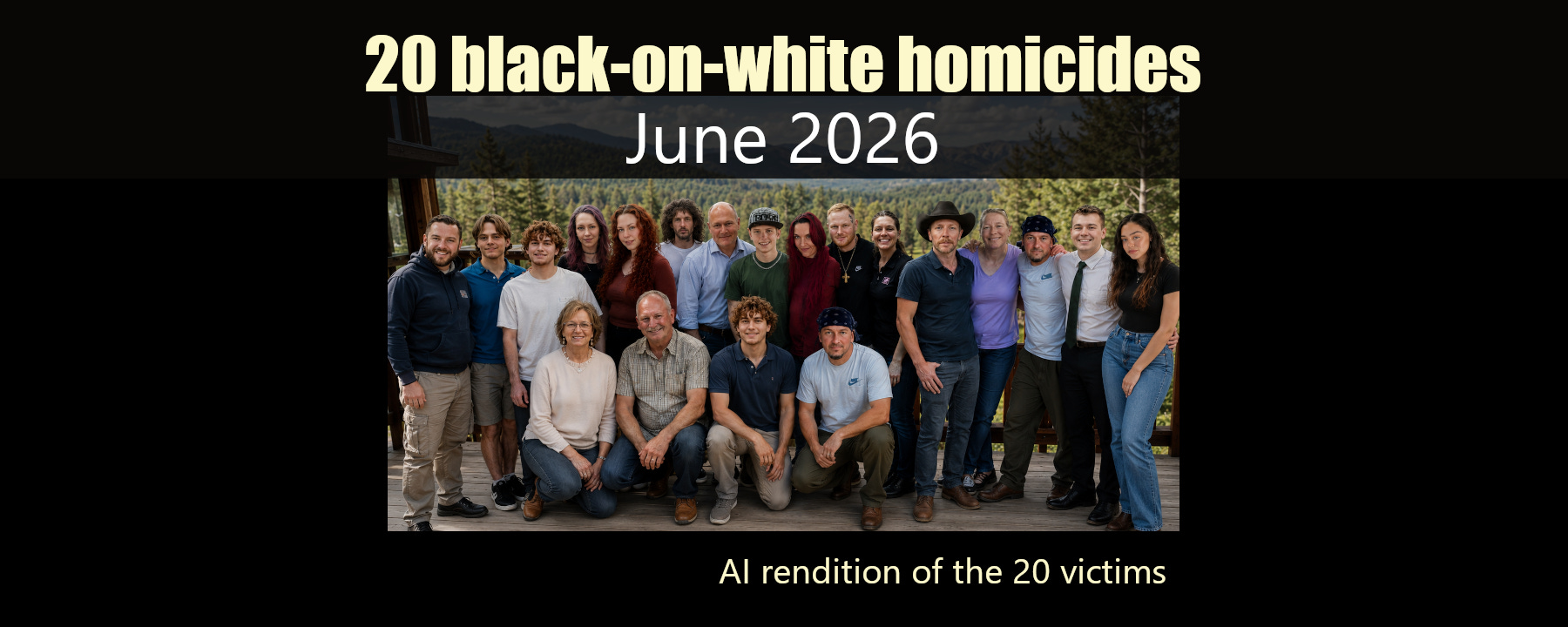
View 20 black-on-white homicides found in June, 2026 ►
 |
Find archived black-on-white homicide news reports here ►
200 latest news reports from 100 top conservative websites ►
0 comments:
Post a Comment