

Does it really matter how we got here?
From a biological perspective, it matters little.
From a cultural and political perspective, there are concerns worth addressing.
 |
It's understandable that globalists — advocates of a one-world government — want us gone.
While I can't point to a manifesto specifically calling for the genocide of white people, I can point to evidence as discernible as the writing on Belshazzar's wall.
A strategy, among others, seems to be the destruction of our sense of self as a people. To that end, globalists push the 'out of Africa' notion front and center. Coupled with mantras such as 'we're a nation of immigrants' and 'there's only one race, the human race,' white people no longer see ourselves as an exclusive race with unique talents crafted by ~70,000 years of nature's breeding.
White people stand in the path of globalization. The reason, I believe, is that we are individualists. Rugged individualism is attributed to our lust for freedom and our willingness to fight for that freedom. It provides a foundation for our knack for life-enhancing innovations.
Again, I'll ask, "Does it really matter?"
What if there is no grand scheme perpetrated by globalists or others to eradicate the white race? The outcome is the same. The Caucasian race is being decimated and, in time, will be erased.
With those thoughts in mind, I fired up my computer and toiled into the wee hours of the morning churning out evidence that argues for the thesis that humanity did, in fact, originate in Europe.
I organized my findings in a rather abbreviated, easy-to-read article.
Here's what I uncovered.
Out of Africa
The longstanding "Out of Africa" theory has dominated discussions on human evolution for decades, positing that modern humans and their ancestors first emerged on the African continent before spreading across the globe.
However, recent fossil discoveries and reevaluations of ancient remains are painting a different picture—one where Europe plays a central role in the story of human origins. This article explores compelling evidence that challenges the African-centric model, arguing that the roots of human life may indeed lie in Europe. By examining key fossils and their implications, we can build a persuasive case for an "Out of Europe" framework [citation]

Challenging the Traditional Narrative
The Out of Africa model relies heavily on fossils like those of early Homo species found in East Africa, suggesting that human evolution began there around 2-3 million years ago. Yet, this theory has faced scrutiny as older and more diverse hominid remains surface outside Africa. Scientists are now questioning whether the divergence of humans from our ape-like ancestors occurred in the Mediterranean region rather than sub-Saharan Africa.
For instance, research indicates that the last common ancestor of humans and chimpanzees may have lived in Europe, pushing back the timeline and shifting the geographic focus. This perspective aligns with ideas where early hominids evolved in Europe before some populations moved southward [citation].

Fossil Discoveries Rewriting History
Europe boasts a rich paleontological record that includes some of the oldest potential pre-human fossils. Excavations in Greece, Bulgaria, and Turkey have uncovered remains dating back over 7 million years, predating many African finds attributed to early hominids. These discoveries suggest that ape-like creatures with human-like traits thrived in European landscapes long before similar evidence appears in Africa.
Environmental conditions in ancient Europe—milder climates and diverse ecosystems—were ideal for the evolution of bipedalism and other human traits [citation].
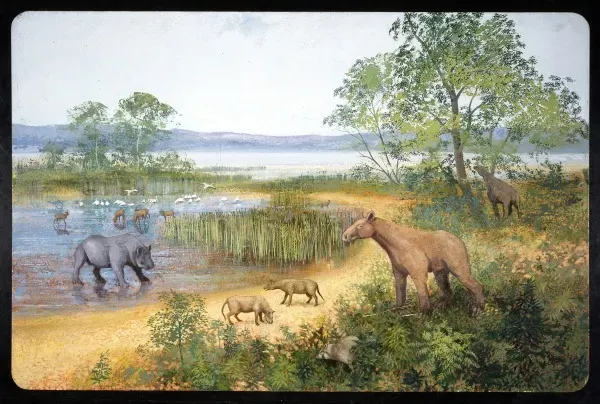
The Graecopithecus Enigma: Europe's Ancient Inhabitant
At the heart of the Out of Europe theory is Graecopithecus freybergi, a 7.2-million-year-old jaw and teeth discovered in Greece and Bulgaria. This specimen, often called "El Graeco," exhibits fused premolar roots—a trait unique to hominins and not found in contemporary African apes. Researchers argue that Graecopithecus represents the earliest known human ancestor, predating African finds by hundreds of thousands of years [citation].

If confirmed, this fossil pushes human origins out of Africa entirely for this pivotal era. For more details, see the original study: Potential hominin affinities of Graecopithecus (PLOS One, 2017).
Anadoluvius turkae: A Turkish Twist on Origins
Even more groundbreaking is the 8.7-million-year-old skull of Anadoluvius turkae from Turkey, which further bolsters the European origin hypothesis. This ancient ape shows facial and cranial features indicative of early hominid evolution, suggesting that great apes—including human ancestors—originated in Anatolia and Europe rather than Africa [source].
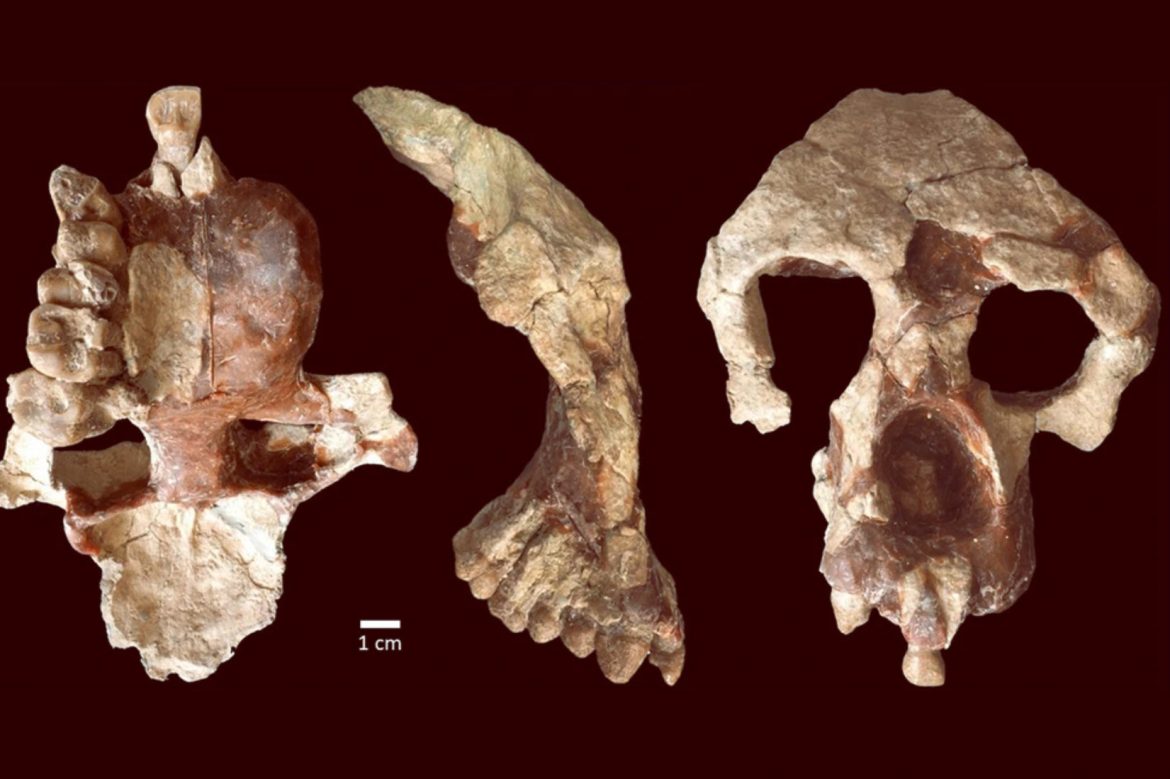
The discovery implies that apes evolved in Europe before migrating to Africa around 7-9 million years ago, reversing the traditional migration narrative. Read the study here: A new ape from Türkiye and the radiation of late Miocene hominines (Communications Biology, 2023).
Implications for Modern Human Evolution
If human life began in Europe, it reshapes our understanding of migration patterns. Early hominids could have spread from Europe to Africa and Asia, with Homo sapiens emerging from a Eurasian stock rather than an exclusively African one. This theory accounts for anomalies in the fossil record and provides a more interconnected view of human evolution.
Conclusion: Embracing a European Cradle
The evidence from fossils like Graecopithecus and Anadoluvius, combined with reevaluations of evolutionary timelines, makes a strong case that human life began in Europe, not Africa. This proposition highlights Europe's significance in our deepest origins. As more discoveries emerge, the narrative may shift further.
For further reading:
- 8.7-Million-Year-Old Fossil Suggests Ancestors of Humans and African Apes Evolved in Europe (Sci.News, 2023)
- Graecopithecus on Wikipedia
- New ancient ape from Türkiye challenges the story of human origins (Phys.org, 2023)
Summary of Sources
-
Anadoluvius turkae and hominine evolution: Earth.com fossil study suggesting hominines may have evolved in Europe. Earth.com
-
Controversial reinterpretation of Graecopithecus: PLOS One papers arguing a possible European origin of early human ancestors. Wikipedia
-
Atapuerca fossil face in Spain: Oldest western European hominin facial bones. The Guardian
-
Happisburgh footprints: Oldest hominid footprints outside Africa. Wikipedia
-
Out-of-Africa support: Scientific summary confirming African origin of modern humans. ScienceDaily
-
Scientific debate on European claims: Wits University critique of European origin claims. Wits University